.png)
In short: Europe produces nearly a quarter of the world's unicorn founders and keeps 6 percent of unicorn value, because 42 percent of its unicorns are built in the US. We spoke to founders at Sifted Summit 2026 who decides what a European deep tech company protects, publishes and owns. Their answer: an investor, a customer or a regulator, usually before the founder has thought about IP strategy at all. Nobody hands startups a patent playbook, and the decision gets made by default.
Nearly a quarter of the world's unicorn founders are European by origin, not far behind the United States at 38 percent. Europe captures 6 percent of global unicorn value. The gap has a simple cause: 42 percent of European-founded unicorns build their companies in the US instead. Those are Dealroom's figures, published in the European Dynamism report Redalpine and Sifted released around the Summit, and they are the whole argument in three numbers. Europe makes the founders. Someone else keeps the company.
For two days at Sifted Summit, sovereignty was the only word in the room, and it meant something different on every stage. Anne Glover of Amadeus Capital Partners, on the China panel, said Europe does not need the whole stack, it needs the chokepoints the rest of the world cannot route around: ASML, and perhaps photonics next. Pascal Mazure of Multiverse Computing said Europe has plenty of gigafactory initiatives and no coordination, and that unless it consumes and produces compute locally, the money and the benefit leave. Philippe Trillat of Latitude and Shruti Iyengar of Future Planet Capital said the same about launch capability. Zuzanna Stamirowska of Pathway said her customers define sovereignty as owning their data and their findings, and that this, not nationalism, is what drives demand.
The capital panel added the uncomfortable half of the picture. Hala Fadel of Eurazeo said companies need several raises above USD 100m to become category leaders, and the default is still to go to the US to build and ultimately list there. The EU's EUR 5bn Scaleup Europe Fund, which can now back UK companies, exists because of that sentence. So does EU Inc, the proposal for a single pan-European company structure that Iwona Biernat pitched from the opening panel. Where the money and the entity go, ownership of what the company has built tends to follow.
So between sessions we asked two people who have had to decide what to protect, and what happened when they did.
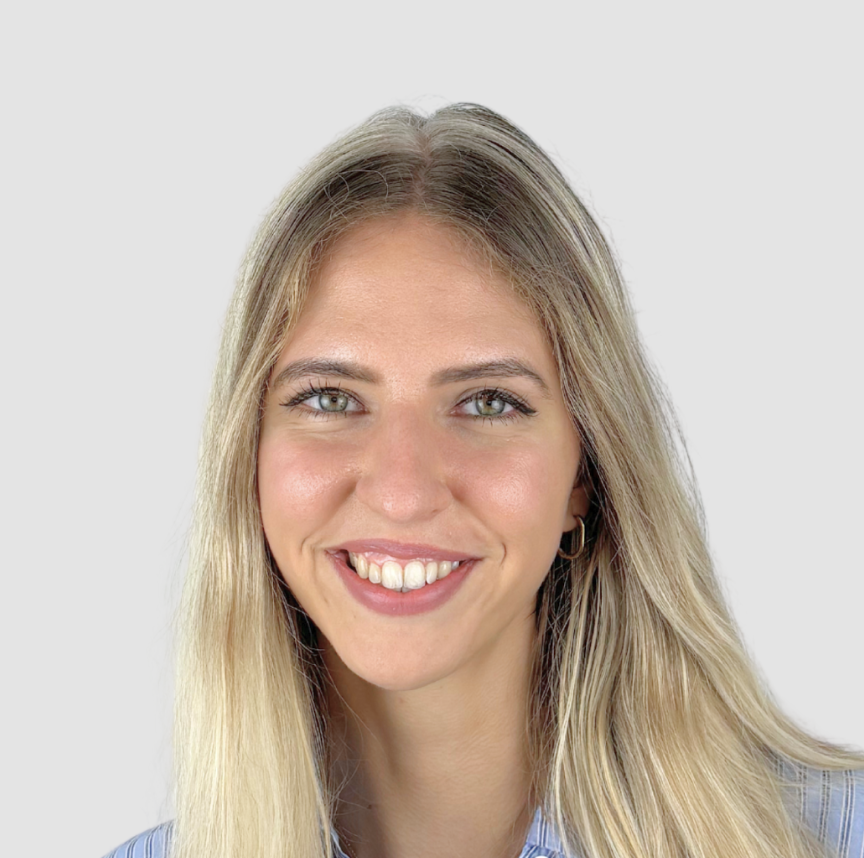
Orqa's Srđan Kovačević: "We never thought about IP as a sovereignty question"
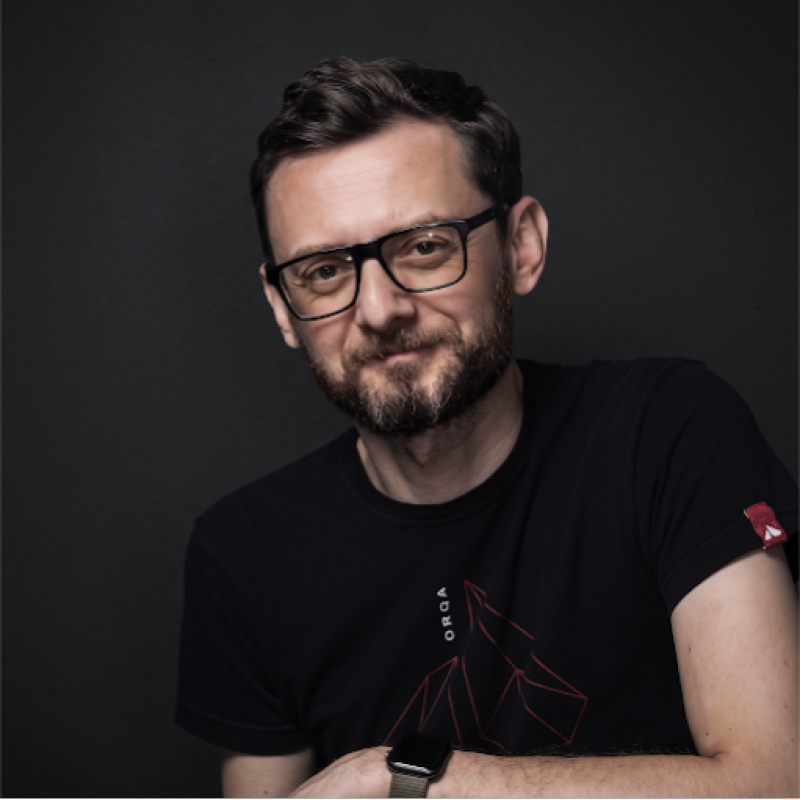
Srđan Kovačević runs Orqa, a Croatian drone company that builds its flight controllers, radios, motors, cameras and circuit boards in-house, took China out of its supply chain, and now licenses production to allied governments rather than exporting finished drones. His LinkedIn headline reads From Dependency to Sovereignty. If anyone was going to describe IP as a sovereignty strategy, it was him.
He did not. "It was mostly compliance," he said of the China decision. Certain markets would not accept components, or component vendors, with a Chinese link in the chain. The licensing model came from reading the defence market: buyers want a local product because they want a supply chain they can reach in a crisis, and because they want their own ecosystem to grow around it. Orqa finds a partner, transfers the technology, and the partner builds in-country. In the United States, Orqa created Orqa U.S. with By Light Professional IT Services, which manufactures in Florida for an Army contract. There, that preference is not implied. It is a condition of bidding.
That model only works if you know exactly what you are handing over. "By giving away IP, we need to be comfortable that this does not negatively influence our long-term competitiveness. You really need to have depth and breadth of your IP, and then decide which portion of it you can be comfortable sharing."
Asked when Orqa started thinking about IP as a sovereignty question, he laughed. "I don't think we've ever thought about IP as a sovereign question as such." It first came up as a legal matter, "mostly incentivised by the investors, who wanted to know: do you have patents?" For a small company it was a cost question. Filing is slow, needs expertise and costs money, "all the things that startups typically do not have." Orqa has three patents. Most tech startups, he said, "approach IP protection as an afterthought," and until recently he was "completely oblivious" to how mature companies use patents strategically, building a stack of them as a deterrent against litigation. "The bar for entry is set a bit too high for startups. You simply don't have the bandwidth to think about that on top of everything else."
He went further than most founders would. Ignoring IP "to a certain point is actually good for startups, because otherwise you would not be able to move at all. It's such an intimidating and arcane area." What he wished someone had told him at ten people: "You have all these playbooks for startups. How to scale the team, how to raise money, what the progression is. When it comes to IP, I haven't really seen a straightforward, agreed-upon playbook. I would love to have had one."
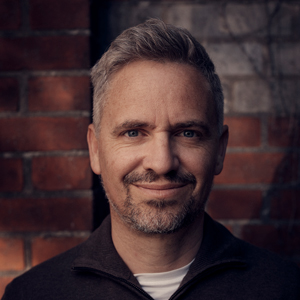
Tariq Krim: "If you don't own the platform, you're stuck in someone else's economy"
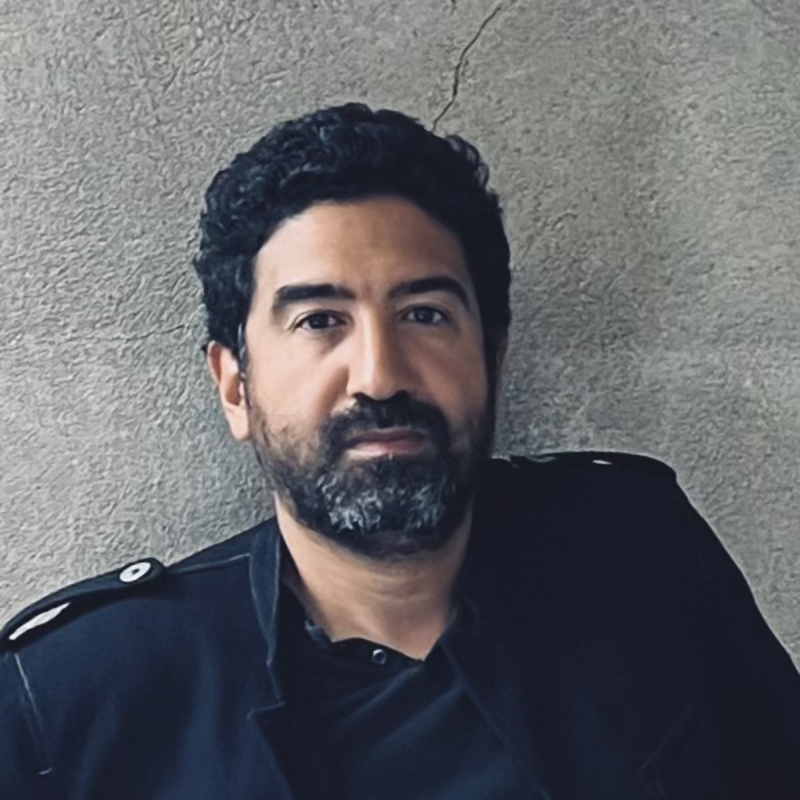
Tariq Krim has been making the digital colony argument for longer than most people have been listening to it. He founded Netvibes and Jolicloud in the years when European consumer internet companies were bought by or beaten by American ones, and had just come off the Main Stage panel on whether policy can stop Europe becoming a digital colony when we sat down.
He started by correcting the premise that Europe does not invent. "Even if the internet was invented in the US, the two most important components of the modern internet were invented in Europe. Linux and the web. Both invented here." Europe was also, for a long time, a serious player in telecoms and industrial technology. "What changed in the 90s is that we let go of the knowledge, the engineering mindset. A lot was outsourced to China." Silicon Valley, by contrast, "is the best place in the world to fund ideas." Then technology turned into platforms. "Platforms run the economy. And if you don't own the platform, you're basically completely stuck in someone else's economy."
He learned that building Jolicloud as the iPhone arrived. "Even if you have the best product, the financing and the platform distribution is controlled by Silicon Valley. You have to go through the app store, they take 30 percent of your revenues." The result, he said, is that Europe now spends an enormous amount of money building its own products on American platforms. "What if we could build our own platform? That's the question we should have asked ourselves."
On whether Europe's culture of open research and open source is how it gives its inventions away, he pushed back. "The question is not about giving away. The problem is that we haven't been able to properly fund technology companies, because the technology and the companies are two different things. Linux was open source. Then Red Hat was the company that took over the market." His own Jolicloud was a Linux distribution. "We didn't get support."
On patents and policy he was careful to say it was not his field, then said something nobody on stage had. "In 5G and 6G, the number of patents filed by China was extremely significant. Patents, in a way, are also a thermometer of scientific innovation." Europe, he said, needs to do two things it is not currently good at: keep the volume of discovery rising, and make sure some of it gets productised and monetised by European companies. "China is the leader in patents and America is the leader in making money with them."
His advice to a founder today: "The new game is about managing your digital dependency. Figure out what you can control, what your unique take on the world is, what your IP is, what makes you unique." Then grow, and protect your users' data from clouds subject to foreign extraterritorial law. And stop copying. "Europe has been spending a lot of time trying to look like Silicon Valley. But Silicon Valley is not as exciting as it used to be. China is exciting right now. They have five companies with frontier models. We had one, Mistral, and it's not even there yet."
Who decides what a European deep tech startup protects?
Three people, three registers, and they contradict our premise in the same way.
We went in expecting founders to describe IP as a sovereignty decision. None of them did. Orqa's China-free supply chain was compliance. IQM's cofounder had never heard patents mentioned in the sovereignty debate. Tariq Krim's ownership story is about platforms and funding first, and he said plainly that patents are not his field. Sovereignty is the word on stage. Down at the company, the decision is made for mundane reasons, by investors asking a question, by a customer requiring a condition, by a cost-benefit calculation a founder makes alone.
What they do agree on is where the gap is. Europe makes inventions. Tariq put it as an economic one: China leads in patents, America in making money from them, and Europe has not been good at either. Srđan put it from the ground: a ten-person company does not have the money, the time or the knowledge to do this properly, so it does not, until someone forces it.
They both said, in different words, that the decision gets made early and by default. Srđan's team treated IP as an afterthought until a term sheet made it a question. Tariq's generation built products and let someone else own the distribution. By the time ownership becomes a strategy question, the answer is usually already fixed.
The investors in the room have already drawn the conclusion. In the European Dynamism report, Redalpine's Sebastian Becker says technical barriers for software companies have been lowered significantly and that data, distribution and deep workflow integration are now what keeps an edge. His colleague Philip Kneis says the firm prefers companies with a hardware component because it is harder and more expensive and creates real protection from competition. Both are describing a moat. Neither uses the word patent. The one form of protection that is written down, filed and enforceable is the one that goes unsaid, by investors and founders alike.
The missing piece is not ambition or capital. Srđan named it: a playbook. Every other founder decision has one. This one does not.
So who owns Europe's inventions?
For now, the honest answer is: whoever asked first. An investor, a customer, a regulator in another country. Europe's founders are not giving their inventions away. They are making the decision that matters while they are looking at something else, and finding out later that it was made.
That is fixable. It needs a method, not a movement, and it needs to arrive before the term sheet does.
If you have just raised and are not sure what you own, that is the question the AI-native patent service was built to answer. Sign up at app.lightbringer.com.
FAQ
Why do European startups end up owned abroad?
Because the decision about what to protect is made early, usually prompted by an investor, a customer requirement or a regulator in another market, and before the founder has an IP strategy. 42 percent of European-founded unicorns build in the US, according to Dealroom.
Do deep tech founders think of patents as a sovereignty issue?
Not in our interviews. Orqa's China-free supply chain was a compliance decision. IQM's cofounder had never heard patents raised in sovereignty discussions with governments. Sovereignty is the word on stage; at company level the IP decision is practical.
When should a startup decide what to patent?
Before any public disclosure: a launch, a paper, a pitch or a demo. The founders we spoke to said the decision is usually made for them, by whoever asks first.
What is missing for startups on IP?
A playbook. Founders have agreed methods for hiring, fundraising and scaling, and nothing equivalent for deciding what to patent, what to keep secret and what to drop.
Who was interviewed?
Srđan Kovačević (Orqa) and Tariq Krim (Human Intention), at Sifted Summit 2026 in London, 30 September to 1 October.
.png)
.png)
.png)
.webp)