In short: Sifted Summit 2026 was about how European startups scale into global champions, and the word that came up on every stage was sovereignty. Panels covered chokepoints, compute and data. What none of them reached is the question of who owns the invention itself, which is where patent strategy for startups decides whether a European company stays European. Lightbringer ran a workshop on exactly that, and interviewed founders for a follow-up piece.
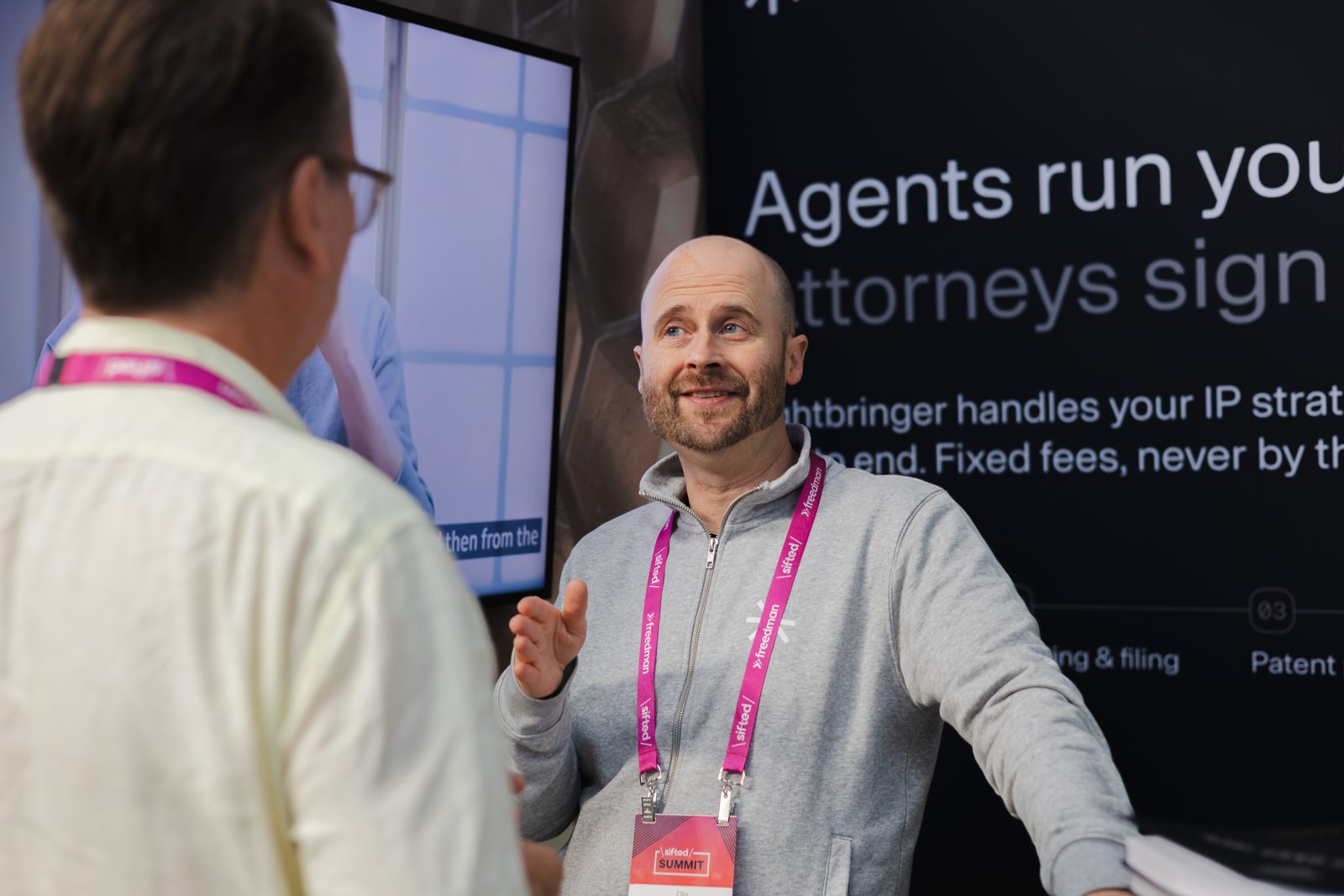
Sifted Summit 2026 ran on 30 September and 1 October at Protein Studios in Shoreditch. The theme was From Challenger to Champion, and Sifted said the programme was deliberately built for Series A and later companies, so the conversations were about scaling rather than starting. Lightbringer had a stand, Ola Wassvik ran a workshop on patents as a growth strategy, and we spent two days listening.
The word of the week was sovereignty. It came up on the space panel, the AI infrastructure panel, the China panel and the closing session on whether Europe is becoming a digital colony. Sifted's own five takeaways piece put it first: Europe is rushing for sovereignty and still working out what it means.
The room agreed Europe should own more of its own tech stack. It did not agree on which part, how much, or what owning something means when the invention is yours and the patent is someone else's. That last question is the one we came to ask, and it is where this recap ends up.
What the Summit was about

The theme was From Challenger to Champion, and the word on every stage was sovereignty. Anne Glover of Amadeus Capital Partners said Europe needs to control the chokepoints the world cannot route around, like ASML. Pascal Mazure of Multiverse Computing said Europe has plenty of gigafactory initiatives and no coordination. Zuzanna Stamirowska of Pathway said customers define sovereignty as owning their data and their findings. Nobody defined it the same way twice.
The room agreed on where Europe should compete: not at the model layer, but in the physical world. Nick Clegg called large language models a monstrously inefficient technology Europe will not catch up on. Redalpine's European Dynamism report, launched with Sifted during the Summit, named six sectors where Europe can lead, and four of them are hardware. European robotics startups raised more than EUR 1.6bn in 2025, double the year before. Redalpine's Philip Kneis put the investor view plainly: the firm prefers companies with a hardware component because it is harder and more expensive and creates real protection from competition.
The number underneath all of it came from Dealroom, via the same report. Nearly a quarter of the world's unicorn founders are European, Europe captures 6 percent of global unicorn value, and 42 percent of European-founded unicorns are built in the US. Chokepoints, compute and data all got their panel. Who owns the invention did not. That is the conversation we went to have.
The quantum panel, with Nu Quantum's Carmen Palacios-Berraquero, Alice and Bob's Chloé Poisbeau and IQM's Juha Vartiainen, spent much of its time on where quantum meets the AI build-out: IQM's work with Nvidia, the Danish AI factory, and whether the field consolidates or specialises. Publishing, protection and ownership did not come up. On the day's biggest deep tech stage, the IP question was absent again.
Ola Wassvik's workshop: patents as a growth strategy in an era of AI
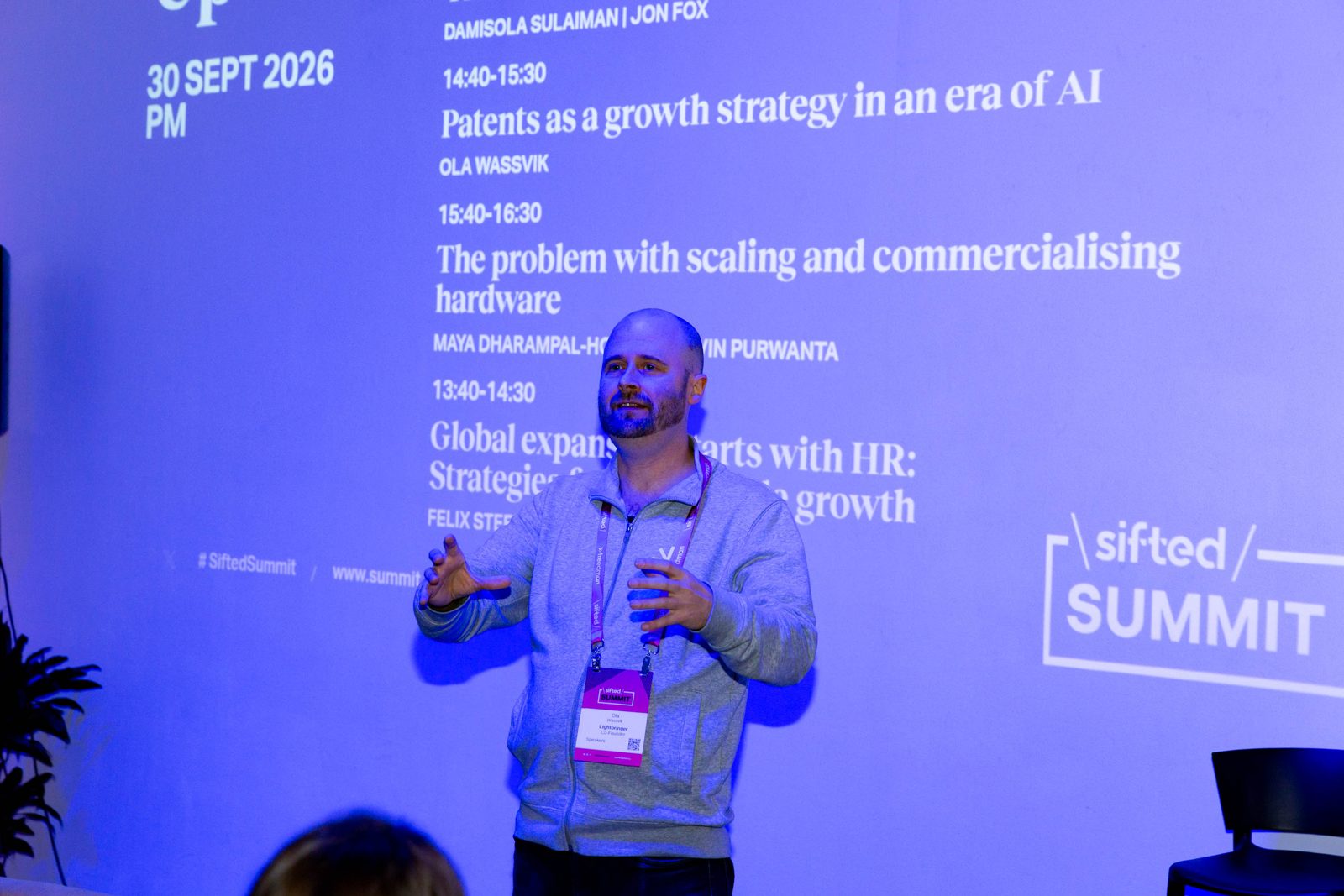
Ola Wassvik's workshop on the first afternoon took the question the main stages kept circling and made the room answer it for their own companies. It opened with a poll: what would a better-funded competitor have to copy to beat you, and how many of you have filed anything that stops them? Hands went up for no filings, one filing, and a portfolio, in roughly that order of frequency.
The premise was simple. AI changes the cost of copying. Your competitors get the same tools you do, so the work that felt hard to reproduce last year may be easy next year. That moves IP from a legal afterthought to a decision inside the build.
The session was built as a sequence of decisions rather than a lecture. First, what a patent is for in business terms: margin, by making commercially important copying harder; licensing, by covering a technical route others need; and fundraising or exit, by showing what you control and why it matters. Then four minutes in pairs on the founders' own companies: who pays and for what outcome, what technical advantage makes it possible, what a competitor would have to copy, and what should stay difficult for them.
From there, the filter. Patent candidate, trade secret, or move on. Something others could discover independently, where you could plausibly detect their use of it and a claim could cover a valuable route, is a patent candidate. Something you can keep confidential, where competitor use is hard to detect and contracts can protect it, is a trade secret. Low business value in either case means defer or drop. Then the filing triggers: business value, enough technical substance to explain how it works, and disclosure pressure, which means a launch, a paper, a pitch or a demo that reveals it. The rule the room wrote down: always file before public disclosure.
The second half covered what founders rarely see laid out. The international filing calendar, from first filing through the 12-month priority deadline, publication at 18 months and national stages at 30 or 31. The difference between patentability and freedom to operate, with the line that got the most nods in the room: owning a patent does not give you permission to use the invention. A worked example of a fictional company's protection decision, with one candidate going to patent review, one to further investigation and one assessed for secrecy. And what an investor actually needs to see: inventor records and signed assignments, a claim-to-product map, freedom-to-operate work and the budget to maintain it all.
It ended with the exercise the whole hour had been building toward. Two minutes to write down the business position you want to protect, the candidate you will investigate, the evidence that is missing, and the owner, next action and date. Thirty seconds to tell your partner. Three questions to take home: what should you protect, what should you keep secret, and what should you stop paying for.
What founders asked about patent strategy at the Lightbringer stand
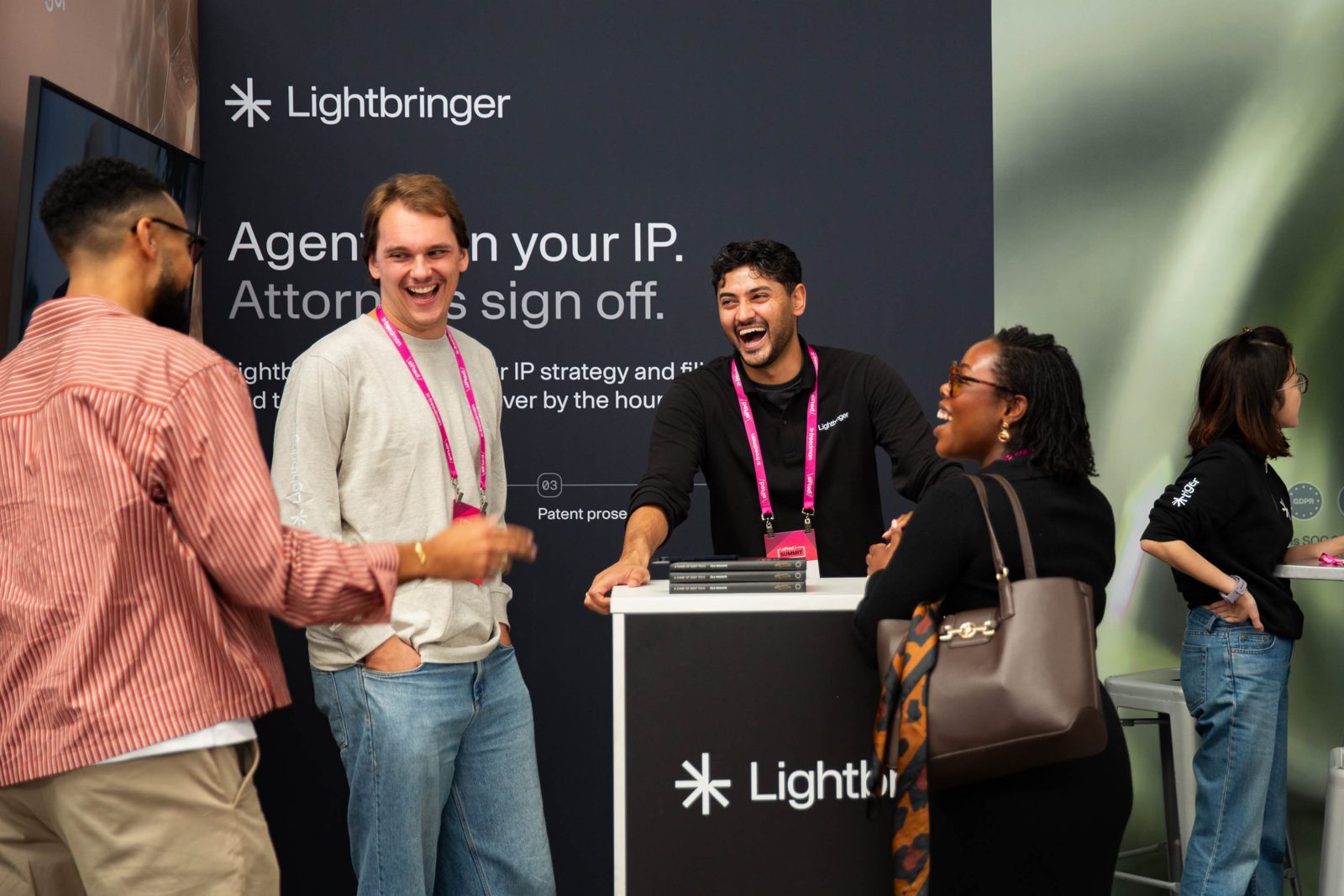
The stand told us what the stages did not. Two days of conversations with founders who had mostly raised recently, and mostly not thought about IP since the seed deck. A few patterns repeated often enough to count as findings.
The most common opening question was some version of "have I already given this away?" Founders who had demoed at a conference, published a paper or put a product page live wanted to know whether the window had closed. Often it had not, but almost nobody knew that a filing has to come before the disclosure, not after.
The second was cost. Founders had been quoted figures by traditional firms that made patents feel like a Series B problem, and had filed nothing as a result. When they heard that the AI patent service files faster and at around half the cost of a conventional firm, with a qualified patent attorney reviewing every application, the conversation changed from whether to what.
The third was the portfolio nobody was managing. Several founders had one or two patents from an earlier stage, were paying renewals on autopilot, and could not say whether those patents still covered what the company now sold. That is a portfolio review, and it takes an afternoon. That is the question Ola's workshop ended on: what should you stop paying for?
And a few arrived with a data room open and no IP line in it. They were about to raise, and nobody had asked them yet. Someone would.
Most of them left with a copy of Ola's book, A Game of Deep Tech, which covers the same ground as the workshop at book length: when to patent, what to keep secret, and how to build a portfolio that follows the business rather than the other way round. Several opened it at the stand to find the chapter on the question they had just asked.
What we took home
Europe spent two days talking about sovereignty with real urgency and no shared definition. Almost every sector the Summit pointed Europe toward is one where the patent is the product, and the layer where ownership is decided never made it onto a stage. It did make it into a workshop, onto a stand, and across a dinner table.
The night before the Summit, Ola hosted a small founders' dinner in London: a table of deep tech founders comparing notes on what they had protected, what they had published, and what they would do differently with a second company. The conversations that happened there do not fit on a stage, and they shaped the questions we asked for the rest of the week.
Between sessions we sat down with founders and investors to ask the ownership question directly. That piece follows next week.
Thank you to Sifted for the programme and the stage, and to my team who made the two days work: Ola Wassvik, Henry Blandford, Joseph Hamid and Amanda Franzén.
If you have just raised and are not sure what to protect, the AI-native patent service is built for exactly that decision. Sign up at app.lightbringer.com.
FAQ
When and where was Sifted Summit 2026?
30 September and 1 October 2026 at Protein Studios, Shoreditch, London. Around 1,500 attendees and more than 200 speakers from over 60 countries.
What was the theme?
From Challenger to Champion: how Europe's next giants are built. The programme was aimed at Series A and later companies.
What were the main takeaways?
Sovereignty dominated, with no agreed definition. The EU's EUR 5bn Scaleup Europe Fund can now back UK companies. Redalpine's European Dynamism report pointed to six sectors where Europe can lead, four of them hardware. Healf topped the Sifted 250.
Why does patent strategy matter for European startups scaling up?
Because the sectors Europe is betting on, fusion, quantum, robotics, space and biology, are ones where the patent is the product. Who owns it decides who captures the value when the company raises abroad, lists or is acquired. Dealroom's figures: 42 percent of European-founded unicorns build in the US, and Europe captures 6 percent of global unicorn value.
What did Lightbringer do at Sifted Summit 2026?
Ola Wassvik ran a workshop on patents as a growth strategy in an era of AI, Lightbringer had a stand in the exhibition area, and we interviewed deep tech founders for a follow-up piece on who owns Europe's inventions.
.png)
.png)
.png)
.png)
.webp)