Patent search guide
Tools, databases & how to find existing patents
Before you patent an idea, search
Most inventions feel original, but similar ideas often emerge independently in fast-moving fields like AI, software, medtech, and consumer technology.
Even if an idea seems new, a similar patent may already exist and limit what you’re able to protect.
A patent search shows what already exists, how crowded the space is, and whether it’s worth investing in filing and legal costs.

Understanding prior art in patent research
And despite the name, patent searching is not only about patents. Strong patent research also involves reviewing prior art, meaning earlier public disclosures that could affect whether an invention is considered new.
That might include existing patent applications, scientific papers, product manuals, conference presentations, technical blogs or publicly released products.
This guide breaks down how to search for patents properly, which patent database matters, how free patent search tools compare and what founders should realistically know before filing a patent application.

Why many patent applications never become patents
Patent offices routinely reject applications initially. Examiners may cite earlier inventions, challenge novelty or argue that claims are too broad.

Avoid filing for inventions that already exist
Reduce the risk of rejection
Save thousands in unnecessary filing costs
Refine your invention before filing
Identify competitors and emerging technologies
Understand how crowded your market is
Spot opportunities for broader claims
Avoid infringing existing patents
It can also reveal something uncomfortable but commercially useful: maybe the smartest move is not filing at all.
Because patents are expensive to file, maintain and enforce. Discovering early that an idea is unlikely to receive meaningful protection can save enormous amounts of time and money later.
What is a patent search?
A patent search reviews existing patents and prior art to determine whether an invention is new.
In patent law, an invention must be new. If it has already been disclosed or patented, it may not qualify. Patent searches usually review:

This research process is often called a prior art search. And despite the name, prior art is not limited to patents.
A YouTube demo, research paper, conference presentation or product manual can sometimes count as prior art too.That’s why professional patent searching is often far more complex than typing a few keywords into Google Patents.
Start with the problem, not the product.
Why keyword searches miss relevant patents
One of the biggest mistakes people make during a patent search is searching for what their product is instead of what it does.
Patents are written in intentionally broad and technical language. The wording inside a patent database rarely matches the wording startups use in marketing.
A “smart coffee mug” might appear in patents as:

Temperature-regulated beverage container
Portable heated liquid vessel
Thermally controlled drinking apparatus
That means keyword searches alone often miss highly relevant prior art.

How patent searches are structured
Professional patent search strategies usually begin by breaking an invention into:
From there, searches expand into synonyms, classifications, and related technologies. The goal is not just finding exact matches, but identifying similar concepts that affect novelty or patentability.
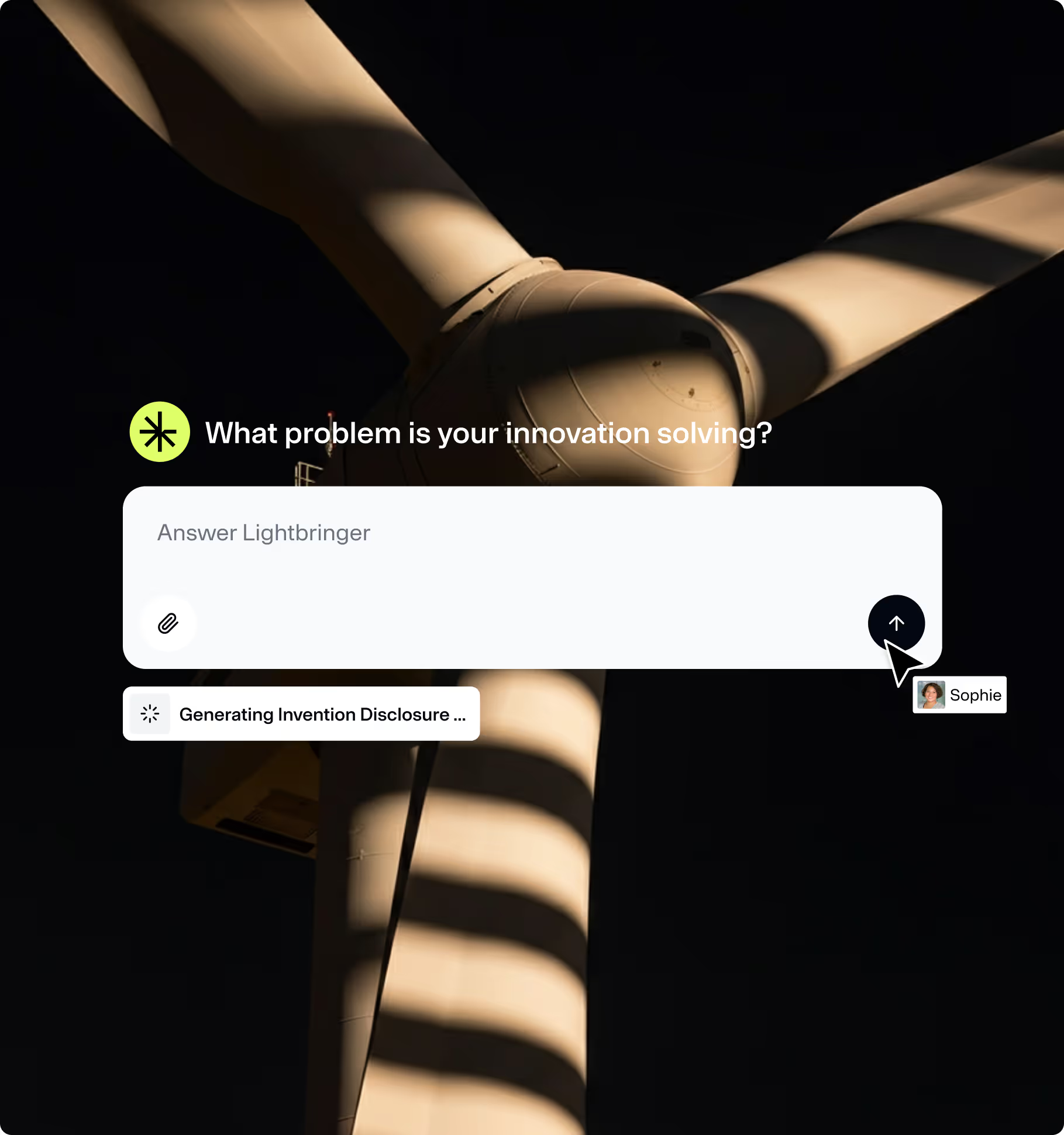

Step 1: Define the core of the invention
Before opening any patent database, clarify what actually makes your invention different.
Many products contain a mix of ordinary and potentially protectable elements. The important part is identifying what is genuinely new from a technical perspective rather than what simply sounds innovative in marketing language.
The clearer this becomes upfront, the stronger the patent search usually is later.
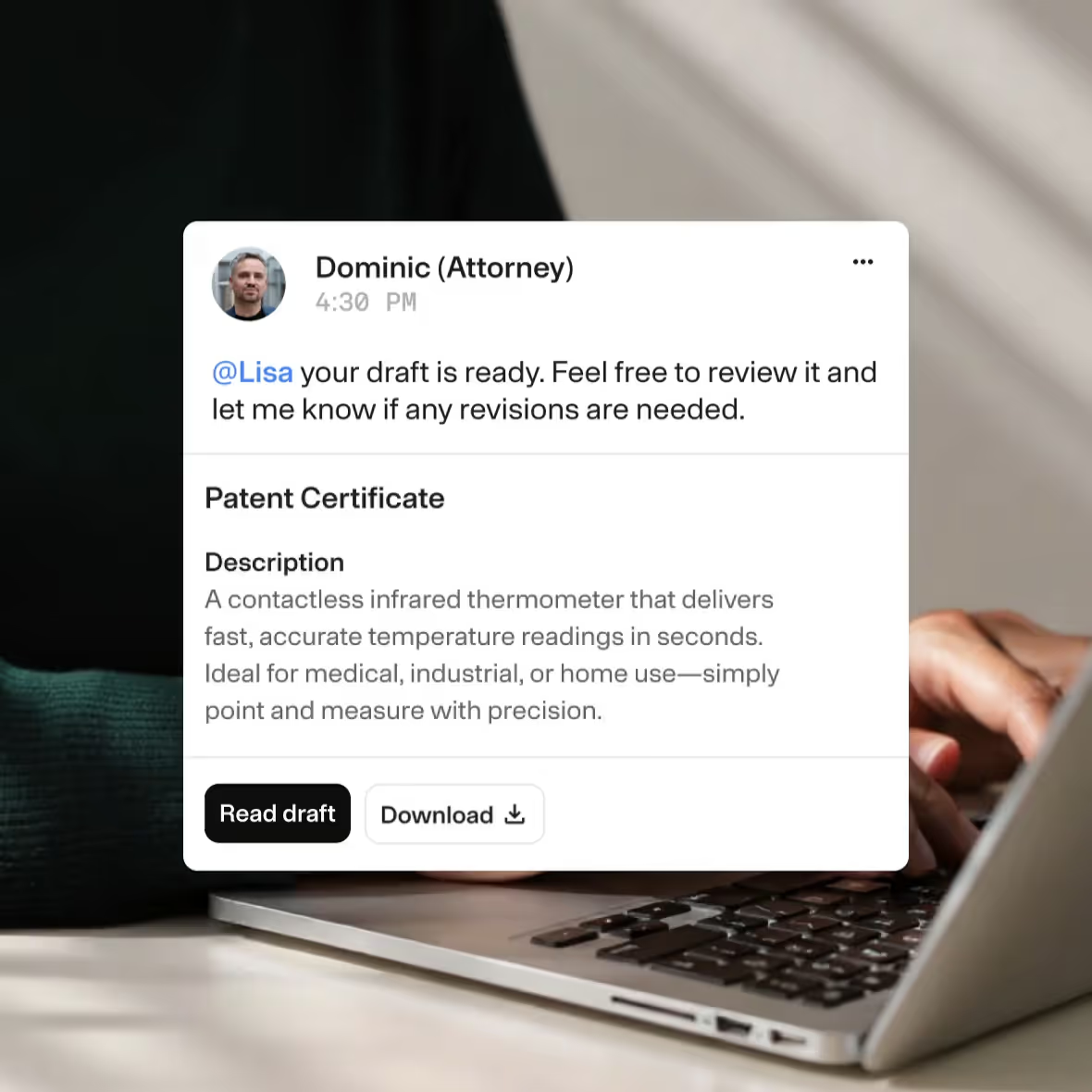
Step 2: Search broadly first
Most effective patent searches begin with broad conceptual searches rather than highly detailed product descriptions.
A wider search helps uncover industry terminology, competitor language and relevant patent classifications early in the process. This matters because two inventions can be technically similar while being described using completely different wording.
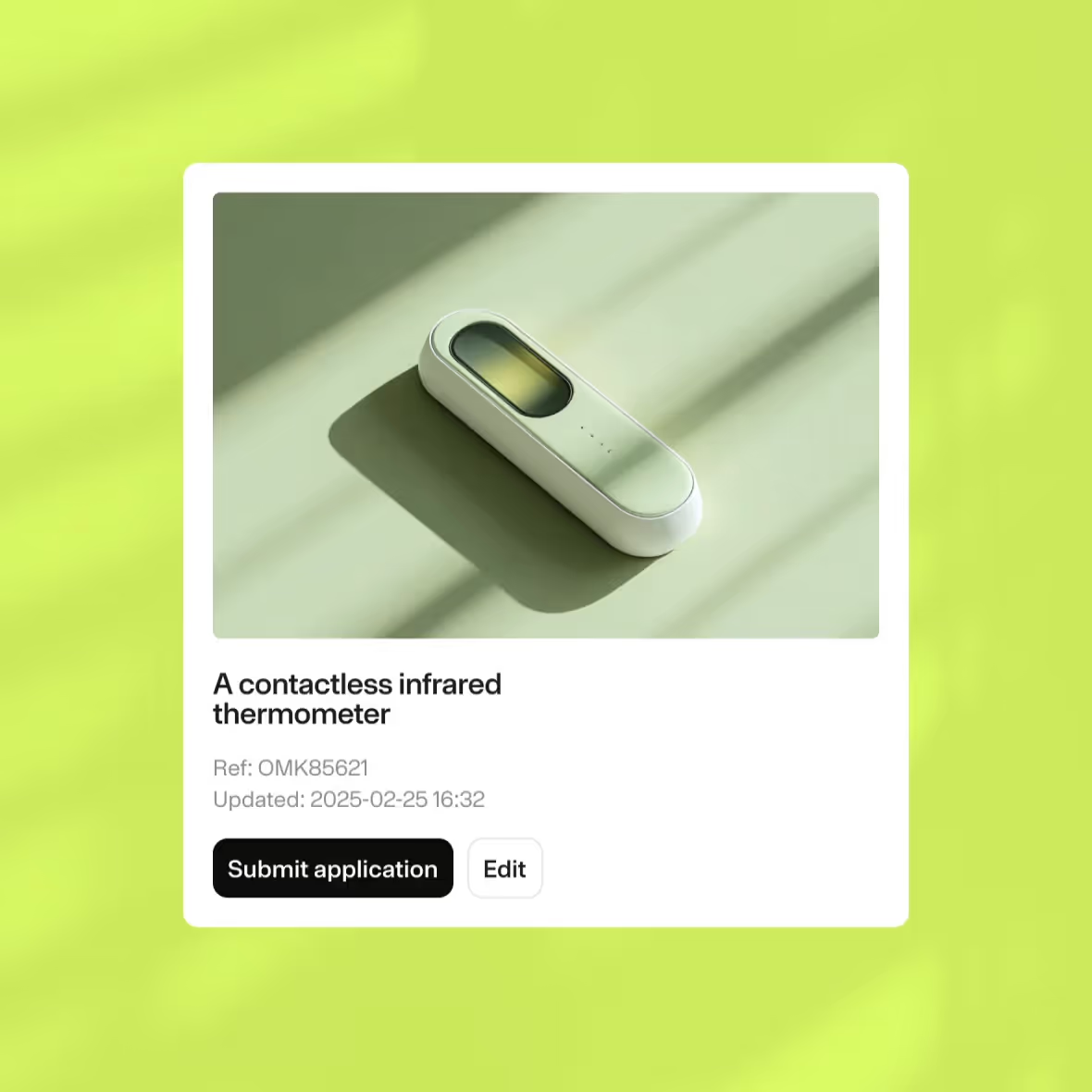
Step 3: Use patent classifications
One of the biggest differences between casual searching and professional patent research is the use of classifications.
These systems categorise inventions by technology.
Once you identify the right classifications, searching becomes far more accurate than relying on keywords alone. A single CPC class can reveal hundreds of relevant filings that keyword searches might miss.
How professionals search for patents
Professional patent searching looks very different from casual database browsing.
Patent attorneys and specialist search firms rarely rely on a single database or a single keyword approach. Instead, they typically combine multiple search methods together to reduce blind spots.
Broad conceptual searching
Classification searching
Citation analysis
Competitor portfolio review
International filing review
Legal status analysis
Prior art expansion outside patent offices
How claims reveal what patent titles often hide
Professionals also spend significant time interpreting claims rather than only reading titles or abstracts.
That distinction matters because patents are legal documents first and marketing language second. A patent title may sound unrelated while the claims describe technology extremely close to the invention being researched.
This is one reason inexperienced searches sometimes create false confidence. A database may appear clear initially while relevant prior art sits buried inside technical claims that never matched the original keywords being used.
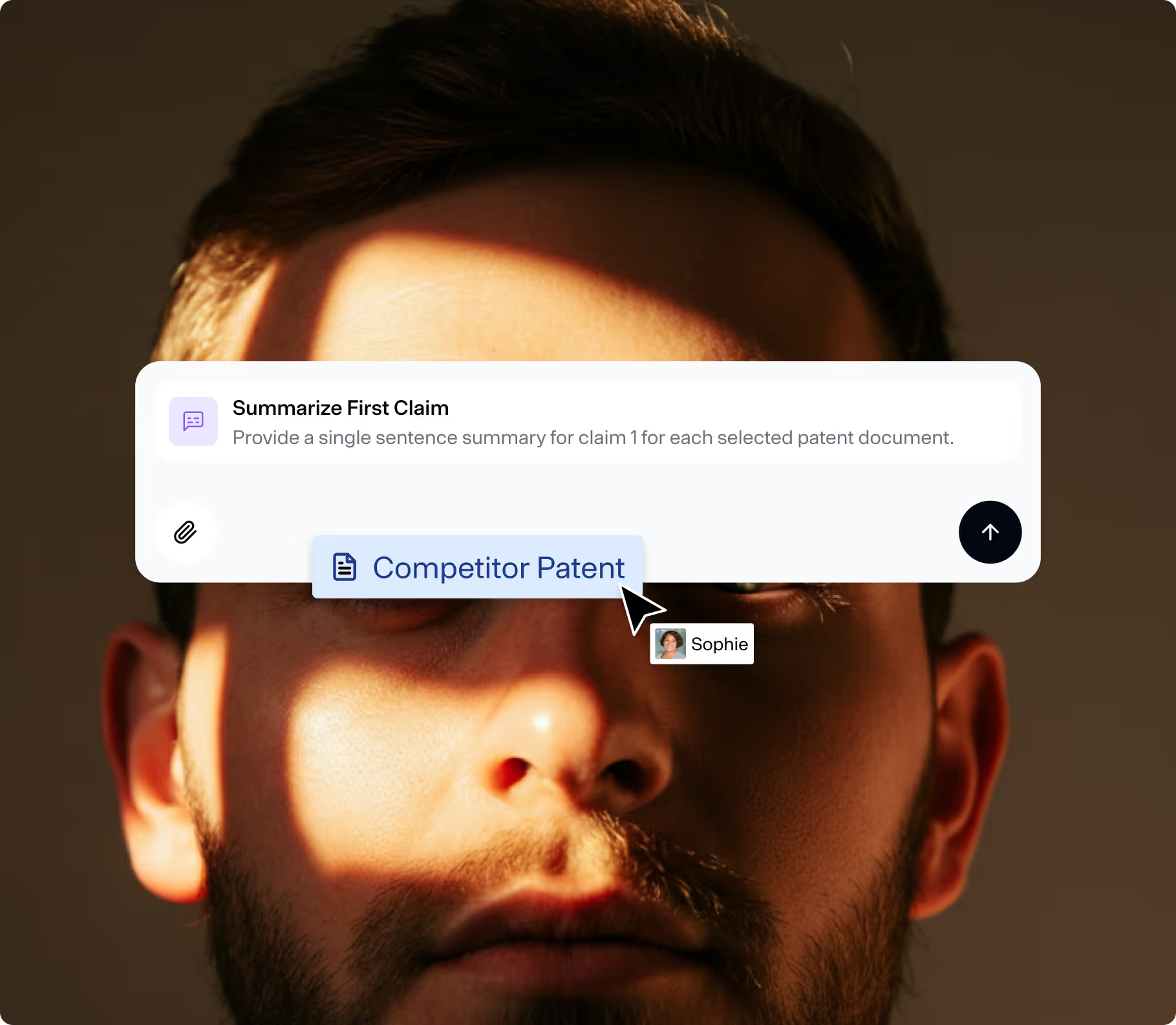
The best patent search databases
Different patent databases serve different purposes. Some are better for quick exploratory searches, while others are designed for deeper legal or international research.
Google Patents
USPTO Patent Search
Espacenet
Patentscope


How to navigate a patent database efficiently
Patent databases can feel overwhelming initially because they contain enormous amounts of highly technical information.
A better approach is treating patent search like investigative research rather than simple browsing. Instead of trying to review everything immediately, focus on:


Strong patent searching is less about finding one perfect result and more about understanding the connected technical landscape.
That’s also why experienced researchers rarely stop after one search session. Patent searching tends to evolve iteratively as new terminology, classifications and related technologies emerge.
How to navigate a patent database efficiently
Patent databases can feel overwhelming initially because they contain enormous amounts of technical information. A better approach is treating patent search like investigative research rather than browsing.
Instead of trying to review everything immediately, focus on:
Strong patent searching is less about finding a single result and more about understanding how a technical landscape connects. That’s also why experienced researchers rarely stop after one search session. It evolves iteratively as new terminology, classifications, and related technologies emerge.
What is a patent search?
A patent search is the process of reviewing existing patents, patent applications and related prior art to determine whether an invention is new.
In patent law, novelty matters. If an invention has already been publicly disclosed, patented or described somewhere else, it may no longer qualify for patent protection. Patent searches usually involve reviewing:
This broader research process is often called a prior art search. And despite the name, prior art is not limited to patents.
A YouTube demo, research paper, conference presentation or product manual can sometimes count as prior art too.

Patent search costs
Patent search costs vary heavily depending on technical complexity and search depth.
At one end, DIY searching through free databases costs nothing except time. At the other, comprehensive international prior art searches conducted by specialist firms may cost several thousand dollars.
Strong patent searching is less about finding one perfect result and more about understanding the connected technical landscape.
International scope also increases costs significantly because researchers may need to review multiple jurisdictions, classifications and languages simultaneously.
Free vs paid patent search platform
Many founders assume expensive patent software automatically produces better results. Usually, the difference is more about efficiency, analytics and workflow depth rather than magical discovery capabilities.

Free patent search tools are often enough for:

The strongest free patent search tools include:

Professional systems may include:
How to interpret patent search results
Finding similar patents does not automatically mean an invention is unpatentable. This is one of the most misunderstood parts of patent searching.
The important question is usually not:
“Does something vaguely similar exist?”
It's:
“How close are the underlying claims technically?”
Why patent claims matter more than appearances
Two products may look almost identical commercially while being legally distinct at the claim level. The reverse can also happen: products that appear visually different may still overlap heavily in how the claims are written.
That’s why experienced patent researchers spend so much time reviewing claims carefully rather than focusing only on abstracts or patent titles.
Strong interpretation matters just as much as strong searching.

Patent search is really about visibility
Most people approach patent searching expecting certainty, but it mainly provides visibility rather than guarantees.
Even the best searches cannot rule out all prior art due to the size of global databases, changing terminology, and unpublished applications.
But understanding the landscape early improves decisions significantly, since filing without it is like entering a market without checking competitors—possible, but costly if it goes wrong.
Trusted by founders.
Loved by engineers.
4.8 out of 5 stars G2 reviews
Thinking about filing a patent?
.webp)