Your engineers ship from inside Claude and Cursor. Your patent work still runs on email and PDFs.
Every technical team now has an AI assistant open all day. Code gets written, reviewed, and shipped inside it. Then something patentable comes out of a sprint, and the process drops back a decade: write a disclosure in a doc, email it to a firm, wait, get a PDF back with comments, wait again. The invention moves at the speed of your inbox, and every round is billed by the hour while the attorney gets back up to speed.
Lightbringer built a different model. AI handles the back-and-forth, and a registered patent attorney reviews every result. Lightbringer MCP is how that model reaches the tools you already work in: Claude, ChatGPT, Cursor, Codex, and any other MCP-compatible assistant.
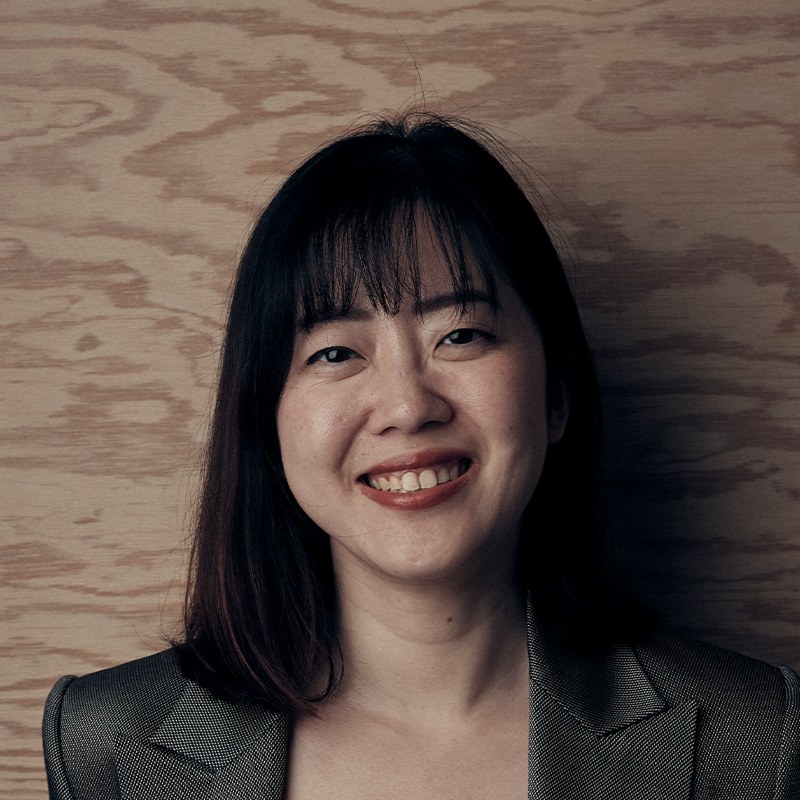
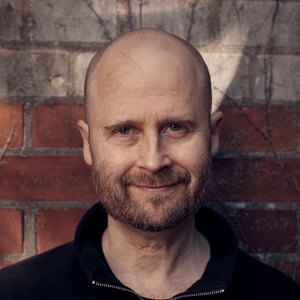
In this session, Dominic Davies, Lightbringer's CEO and a 20-year patent attorney with 200+ patents filed, and Markus Andreasson, Lightbringer's CTO with 50+ patent applications to his own name, run a live patent review end to end: an AI agent and a patent attorney working through comments, redlines, and approvals in one conversation. Dominic covers where attorney judgment sits in the loop. Markus covers what is happening under the hood, and why the architecture matters.
What you'll walk away with
- A live, unscripted walkthrough of an AI agent and a patent attorney working the same invention: capture, quality review, attorney comments, replies, and approval, without leaving the chat.
- Where the human stays in the loop, and why. Which decisions the agent handles, which ones it stops and asks you about, and which only a registered patent attorney touches.
- How the connector actually works, from the person who built it. One server, 17 tools, OAuth access scoped to your organisation, reads running freely and every write confirmed with you first.
- What this changes about who owns IP strategy. Why moving patent work into the tools your team builds in puts the technical team back in control, instead of whoever happens to hold the information.
- How to connect it yourself. What you need on the Lightbringer side and in your assistant to be up and running in minutes.
Why this, why now
Two things happened at the same time. The Model Context Protocol went from an Anthropic release in 2024 to a cross-vendor standard: adopted by OpenAI across its platform in 2025, then donated to the Linux Foundation's Agentic AI Foundation in December 2025 with Google, Microsoft, AWS, and OpenAI behind it. And AI agents stopped being demos. Technical teams now run real work through them every day.
Patent work is one of the last workflows still sealed off from that. It sits with an outside firm, on a billable-hour clock, and the people who built the invention see it only when a PDF comes back. That gap is expensive twice: in fees, and in inventions that never get filed because the process is too heavy to start. For a deep-tech company, where AI is compressing every other advantage and technical IP is becoming a bigger share of the moat, the second cost is the one that matters.
If your team ships from inside an AI assistant and your patent work still happens somewhere else, this is the session built for you.

About the Host
Dominic Davies is CEO and co-founder of Lightbringer, with 20 years as a patent attorney. He didn't start in law, though. He started as a software engineer, and that background meant he saw patent work differently: where others saw necessary complexity, he saw inefficiency.
In 2013, he started building tools to automate the repetitive parts of his own practice. When AI caught up to his vision, Lightbringer was born. Since then he's filed patents across biotech, software, hardware, and industrial automation, building Lightbringer around what he's learned actually works.
Read more →Guest speaker
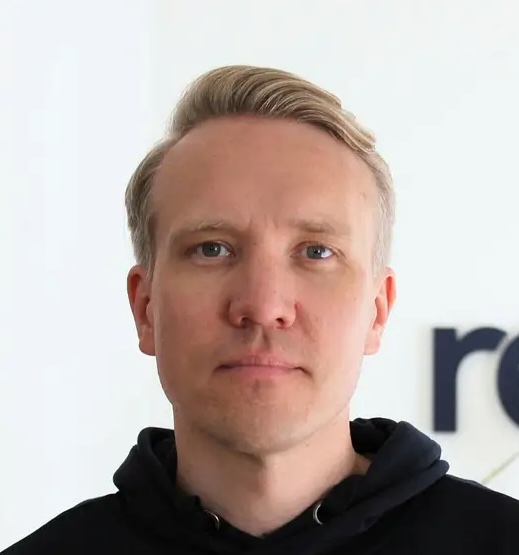
Jonas Åström
Deep tech founder and Investor
Jonas is an engineer, entrepreneur, and investor focused on building and scaling hardtech companies in resilience, security, and defence. His background spans technology, strategy consulting, product management, marketing and monetisation, and electrical and embedded engineering, both hardware and software.
Read more →
Who this is for
- CTOs, founding engineers, and technical founders at software, AI, and deep-tech companies, roughly seed to Series B
- Teams already working in Claude, ChatGPT, Cursor, or Codex every day who want their patent work in the same place
- Founders who handed IP to an outside firm and lost sight of what's in the pipeline, what's been filed, and why
You don't need to know what MCP stands for. You do need to be building something worth protecting.
Sign up for free
When and where
Date: October 13, 2026
Time: 17:00 CEST / 16:00 BST / 11:00 AM ET / 08:00 AM PT
Format: Live webinar with live product demo, 45 minutes including Q&A
Cost: Free
FAQ
Do I need to be technical to follow this?
No. The demo is a patent review, not a coding session. Markus will go a level deeper on how the connector works for those who want it, but the core of the session is watching an invention move from capture to attorney approval inside one conversation.
Does a real patent attorney review the work?
Yes. AI does the heavy lifting, and registered patent attorneys handle judgment, strategy, and quality. You can read attorney comments, reply, and approve changes directly from your assistant, and attorneys work in Lightbringer as they always have.
Will my AI assistant take actions without my approval?
No. Anything that only reads data runs freely. Anything that changes data, such as creating, updating, submitting, or commenting, is confirmed with you first by default. You'll see this happen live in the session.
Does Lightbringer MCP work with tools other than Claude?
Yes. Any MCP-compatible client that supports remote streamable HTTP servers with OAuth connects using the same endpoint, including ChatGPT, Claude Code, Codex, Cursor, and Windsurf.
What does Lightbringer MCP cost?
Nothing. The Lightbringer platform, including the MCP connector, is free to use. Starter is free; Pro is a fixed quarterly price covering strategy, drafting, filing, and prosecution. No hourly rates, no surprise invoices.
Is this legal advice for my specific patents?
No. This is educational, not a substitute for a formal assessment of your own IP. If you want that after the session, we offer free strategy sessions for exactly this.
Will I get a recording if I can't attend live?
Yes, register anyway. Everyone who signs up gets the recording afterward, whether or not you can join live.
Is this the same as Lightbringer's SF Tech Week session?
Same topic, different room. Dominic presented a version of this at SF Tech Week on October 8. This session adds Markus for the product and engineering depth, runs longer, and is open to anyone, anywhere.
Is this part of Patents for Entrepreneurs?
No. This is the second session of Built to Scale, a series for founders who are past the basics and actively scaling, fundraising, or expanding into new markets. If you're looking for foundational patent education instead, Patents for Entrepreneurs is the right series for that.
DISCLAIMER: THIS IS NOT LEGAL ADVICE. YOU SHOULD CONTACT A PATENT ATTORNEY IF YOU NEED A FORMAL ASSESSMENT OF PATENT INFRINGEMENT OR FREEDOM TO OPERATE.